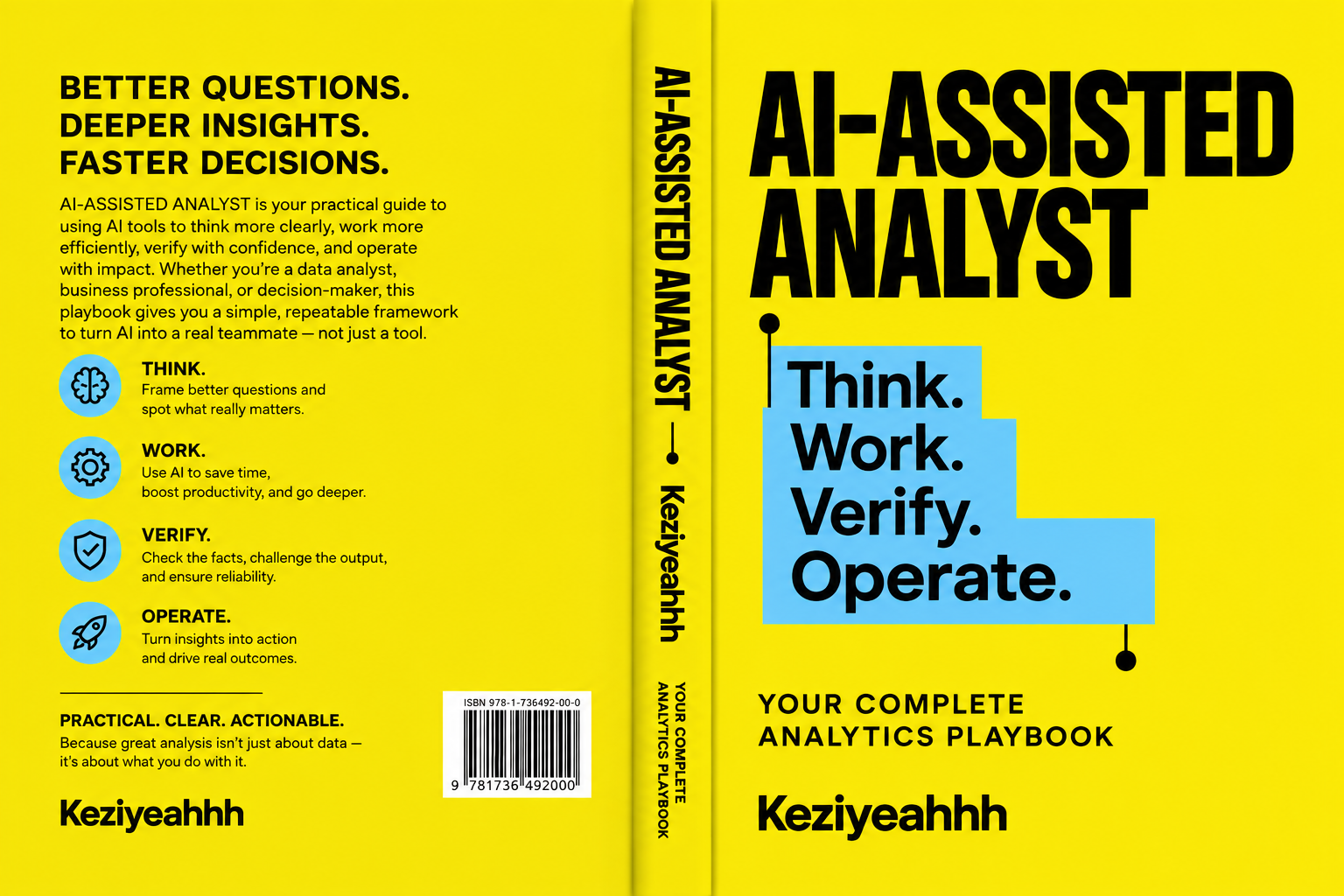
AI can write SQL, explain a chart and draft an analysis in seconds. The difficult part is deciding whether the output deserves to be trusted.
AI is a copilot, not an oracle
A useful analyst mindset is to treat AI as a fast collaborator. It can draft, suggest, explain and challenge. It should not silently become the owner of the conclusion.
The analyst still owns four things
- Question: what decision are we trying to support?
- Context: what do the data and business rules actually mean?
- Verification: what evidence proves the output is sound?
- Decision: what should happen next?
A better prompt pattern
Instead of asking “Why did revenue fall?”, provide the metric definition, comparison, available dimensions and known data-quality limitations. Ask AI for competing hypotheses and the evidence that would support or reject each one.
Challenge the answer
After you have a result, ask: What assumption could break this analysis? What alternative explanation fits the same evidence? Which edge case did we not test?
The practical standard
You should be able to explain the final analysis without opening the AI transcript. If you cannot, the workflow has probably optimized for output rather than understanding.
For a detailed workflow, read the AI-assisted workflow from question to insight.
2 responses to “Think Like an AI-Assisted Analyst: AI Is a Copilot, Not an Oracle”
[…] reading: AI Analyst Workflow · How to Verify AI Analysis · Analytics […]
[…] reading: AI Analyst Workflow · AI-Assisted Analytics OS · Complete AI-Assisted Analyst […]